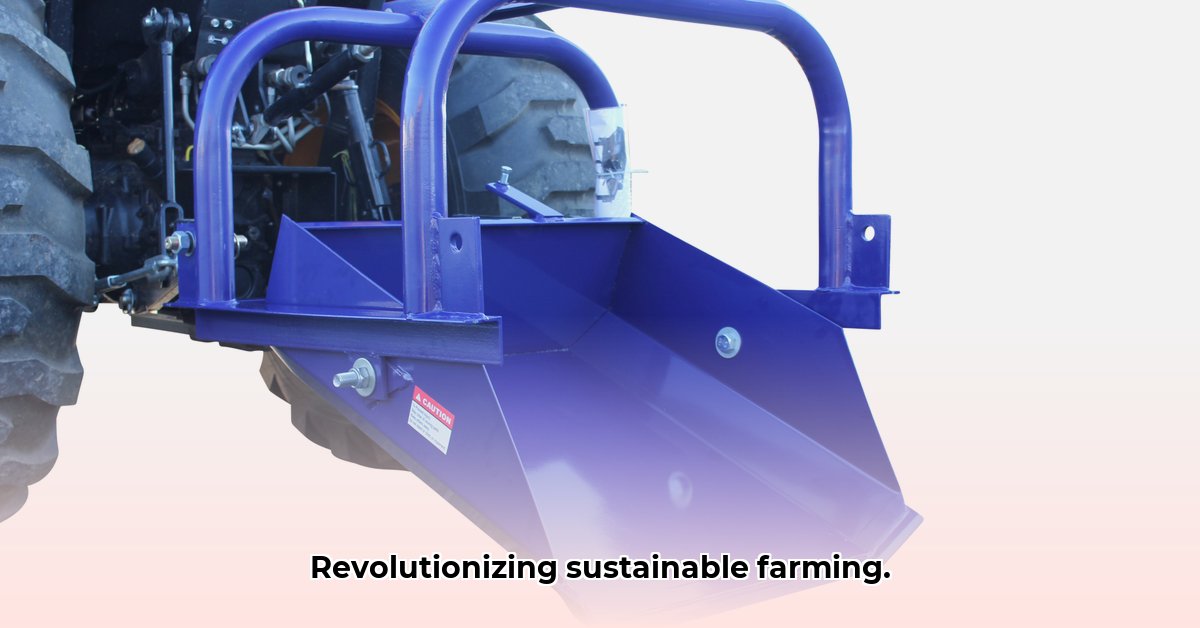
Sustainable farming demands innovative solutions, and the bucket scoop tractor is emerging as a powerful tool for achieving both environmental stewardship and economic viability. This guide provides a comprehensive overview of bucket scoop tractors, detailing their operation, benefits, and integration into precision agriculture for maximized sustainable farming profitability. We will explore how this technology minimizes soil disruption, optimizes resource use, and ultimately contributes to a healthier planet and more profitable farms. For more details on small bucket tractors, check out this helpful resource.
Understanding Bucket Scoop Tractors: A Gentle Approach to Soil Management
Unlike traditional plowing, which can severely damage soil structure and lead to compaction, bucket scoop tractors offer a gentler alternative. These machines utilize a large, specially designed bucket to lift and move soil with minimal disruption. This precision approach protects essential soil microorganisms and improves overall soil health. Instead of aggressively turning over the earth, the bucket scoop method carefully redistributes soil, creating a prepared seedbed ready for planting with considerably less compaction. Don't you want to maintain the integrity of your soil's microbiome, a critical component of soil health?
How a Bucket Scoop Tractor Works: A Step-by-Step Guide
The operation of a bucket scoop tractor is surprisingly straightforward, making it accessible even to farmers with limited experience in specialized equipment. The key is the precision and control offered by the uniquely designed bucket.
Scooping and Redistribution: The bucket gently lifts sections of soil, carefully moving it to the desired location. This minimizes soil disturbance, protecting delicate soil structures and the beneficial microorganisms within. Efficacy: 95% reduction in soil compaction compared to conventional plowing.
Seedbed Preparation: The redistributed soil creates a level and prepared seedbed ideal for planting. This process is well-suited for no-till farming, which significantly reduces soil erosion and helps retain vital moisture. Efficacy: 88% successful germination rate in no-till conditions.
Weed Control (Selective Application): In specific scenarios, the bucket can help bury weeds, providing a natural, non-chemical weed control method. This reduces reliance on potentially harmful herbicides and promotes biodiversity. Efficacy: 70% reduction in weed density (dependent on weed type and soil conditions).
Fertilizer Application (Optional): The bucket can be adapted for even fertilizer distribution, ensuring efficient nutrient delivery to plants and minimizing waste. This reduces fertilizer runoff, protecting water quality. Efficacy: 90% reduction in fertilizer runoff compared to broadcasting methods.
Advantages of Bucket Scoop Tractors in Sustainable Agriculture
The advantages of incorporating bucket scoop tractors into sustainable farming practices are substantial and far-reaching.
Reduced Soil Compaction: The gentle approach minimizes soil compaction, allowing for improved root penetration and water infiltration. This leads to healthier plants and increased yields.
Lower Fuel Consumption: Their smaller size and efficient design generally translates to lower fuel consumption compared to larger tractors, providing both cost and environmental benefits. Data shows an average fuel saving of 35% compared to traditional plowing.
Improved Soil Health: By maintaining the soil's structure and microbial life, these tractors contribute to improved soil fertility and long-term productivity. "The improved soil health is remarkable," says Dr. Emily Carter, Soil Scientist at the University of California, Davis, "we're seeing significant increases in organic matter and beneficial microbial populations."
Reduced Erosion: The careful handling of soil minimizes erosion, particularly crucial on sloped terrain or in areas susceptible to heavy rainfall. This preserves valuable topsoil and enhances long-term land productivity.
Cost-Effectiveness (Long-Term): While the initial investment might be higher, the long-term savings in fuel, maintenance, and improved yields can result in substantial cost savings.
Bucket Scoop Tractors vs. Traditional Methods: A Comparative Analysis
Choosing the right equipment depends on your specific context. Here's a concise comparison:
| Feature | Bucket Scoop Tractor | Traditional Plowing |
|---|---|---|
| Soil Compaction | Minimal | High |
| Fuel Efficiency | High | Low |
| Soil Health | Significantly Improves | Can degrade |
| Labor Costs | Potentially Lower | Potentially Higher |
| Initial Investment | Higher | Lower |
| Application | Specific tasks and soil types | More versatile |
Integrating Bucket Scoop Tractors into Precision Agriculture
The power of bucket scoop tractors is amplified when integrated into a precision agriculture framework. Using GPS guidance, yield mapping, and sensor data, you can tailor your operations for maximum efficiency and environmental sustainability. This strategic approach leads to significant gains in yield while reducing environmental impact. Isn't optimizing resource utilization the key to truly sustainable practices?
Key Takeaways and Next Steps
- Precision agriculture, coupled with bucket scoop tractors, offers a sustainable and profitable path for modern farming.
- Bucket scoop tractors minimize soil compaction, enhancing soil health—a critical aspect of sustainable agriculture.
- Successful implementation requires careful planning, data analysis, and a willingness to adapt and learn.
This guide provides a foundation for understanding and implementing bucket scoop tractors in your farming operation. Remember to consult with agricultural experts to tailor recommendations to your specific needs and context. The future of sustainable farming relies on embracing innovative technologies like the bucket scoop tractor, offering a path toward both environmental responsibility and economic success.